

Standing at the starting point of 2026, looking ahead to the global development of artificial intelligence (AI), multiple variables—technology, industry, energy, and governance—are intertwined, shaping this pivotal year. Related organizations predict that an increasing number of leading AI companies will focus on improving the reasoning capabilities of large-scale models and the task execution capabilities of intelligent agents, driving AI's evolution from "generating" to "planning and acting." Numerous enterprise applications will embed task-oriented AI agents. Accompanying these technological breakthroughs is energy pressure, with global data center power consumption remaining high.
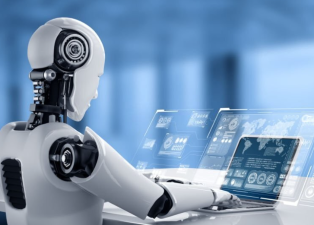
Technological Breakthroughs: General AI and Multimodal Development
General AI (AGI) Progress: Experts have differing predictions regarding the timeline for AGI's realization, ranging from 2026 to 2045. The core goal of AGI is human-level cross-domain cognitive ability, requiring breakthroughs in understanding physical rules and global optimization.
Multimodal and World Models: Multimodal technology enables deep integration of text, images, and voice. World models simulate the dynamics of the physical world, providing decision support for scenarios such as autonomous driving, and are a crucial technology driving AGI development.
Embodied Intelligence and Spatial Intelligence
Embodied intelligence is making significant breakthroughs, with large-scale visual, language, and motion models enhancing robot execution capabilities. Spatial intelligence is shifting from two-dimensional processing to three-dimensional prediction, providing AGI with physical common sense and causal reasoning abilities.
Application Trends: Industry Implementation and Ethical Standards
Deep Industry Integration
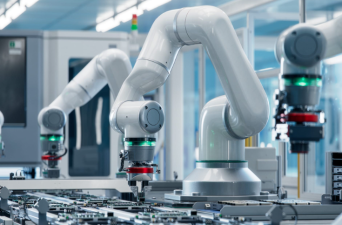
Industrial Manufacturing: AI is being used across the entire process of R&D, production, and service. After intelligent transformation, an auto parts company saw a significant increase in efficiency and a substantial decrease in product defect rates.
Agriculture: Intelligent agricultural machinery and drones are driving the digital transformation of agriculture, enabling precision operations.
Service Industry: The shift from digital to intelligent is accelerating in government, finance, and legal sectors, with the adoption of intelligent terminals.
Ethics and Global Governance
A global AI governance system needs to be established to promote the alignment of international rules and technical standards. Enterprises must improve data compliance and algorithm ethics review to ensure ethical technological development.
Social Impact: Employment Changes and Privacy Protection
Changes in Employment Structure
AI will replace some repetitive jobs while creating new employment opportunities. Enterprises need to integrate AI into their knowledge systems to drive the intelligent transformation of business processes.
Privacy and Security
Data security and privacy protection are important issues. We must use technological means and legislative measures to balance data utilization and privacy protection.
Improving public awareness requires building intelligent learning models and promoting widespread AI knowledge among the public. Universities and enterprises should strengthen digital ethics education and form a multi-party collaborative governance system.